How to Keep Leveled Concrete From Sinking Again
Updated Jul 2026 · 6 min read
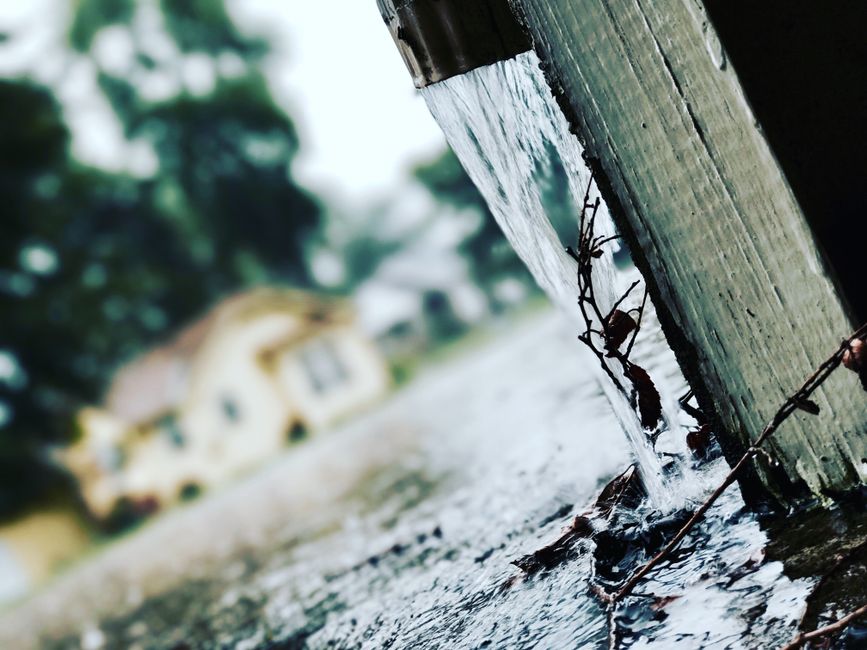
The lift is only half the job
When a crew raises a sunken driveway or patio back to grade, the slab looks brand new again — flush at the seams, no more toe-stubbing lip, no more birdbath puddle after a storm. But the concrete didn't sink on its own. It dropped because the ground underneath it moved, washed away, or compacted. A good leveling job fills that void and restores support. It does not, by itself, stop the ground from misbehaving a second time.
That's the part homeowners tend to miss. Whether the work was done with mudjacking slurry or polyurethane foam, the longevity of the result depends heavily on what you do — or fail to do — with the water and soil around that slab afterward. The good news is that most of it is simple, cheap, and squarely within a homeowner's control. Here's how to protect the investment you just made.
Water is almost always the culprit
Uneven concrete is usually a water story. Rain and runoff carry fine soil particles out from beneath a slab over the years, leaving hollow pockets that eventually collapse under the weight of the concrete and whatever rolls across it. Poor drainage, a downspout dumping right at the edge of a driveway, or a yard that slopes toward the house instead of away from it will keep feeding that same erosion after your slab is lifted.
So the single most valuable thing you can do is manage where water goes.
Send roof water away from the slab
Walk your property during the next heavy rain, or run a hose into your gutters, and watch where the downspouts discharge. If they empty next to a driveway, sidewalk, patio, or pool deck, that water is soaking straight into the soil that supports the concrete. Add downspout extensions or splash blocks to carry roof runoff several feet away from any slab and out toward the lawn or a drainage area. This one change removes a huge share of the erosion pressure.
Check the slope of the ground
Soil around a slab should fall away from it, not pool against it. Over time, mulch beds settle, flower borders build up, and grading gets lazy. Where you can, re-establish a gentle slope that moves surface water off and away. Low spots that hold puddles for a long time after rain are worth regrading or addressing with a simple drain, because standing water is exactly what undermines concrete.
Look at your irrigation
Sprinkler heads that spray directly onto or beside a slab, or a drip line leaking near an edge, keep the supporting soil saturated. Saturated soil is soft soil, and soft soil compresses. Aim spray heads at the lawn and plantings, not at the concrete, and fix any leaks promptly.
Seal the joints and cracks
A leveled slab still has control joints, expansion gaps, and — often — a few hairline cracks from its earlier settling. Each of those is a doorway for water to travel straight down to the soil below. Keeping them sealed with a flexible, exterior-grade joint sealant slows water intrusion considerably.
Inspect the seams once or twice a year and after hard freezes. Sealant is not permanent; it shrinks, dries, and pulls away over time. Reapplying it periodically is one of the cheapest forms of insurance against the freeze-thaw cycle, in which water gets into a gap, freezes, expands, and pries the crack wider each cold snap.
Mind the freeze-thaw and the salt
In colder climates, winter is hard on concrete. Beyond keeping joints sealed, be careful with de-icing chemicals. Many common de-icers accelerate surface scaling and can worsen existing cracks. Where you can, use sand for traction instead of aggressive chemical melters, and shovel promptly so meltwater doesn't repeatedly refreeze in the seams. A slab that stays intact on top holds water out of the soil below.
Keep heavy loads in mind
Residential slabs — driveways, patios, garage aprons, pool decks — are built for everyday use, not for concentrated heavy loads. Parking a loaded dumpster, a heavy RV, or a delivery truck on a residential driveway for extended periods can stress soil that was only recently re-supported. If a big-load event is unavoidable, spreading the weight or keeping it brief is kinder to the ground underneath. Ask your contractor what the newly leveled area can reasonably handle.
Watch for tree roots and soil movement
Large trees near a slab do two things: their roots can lift and crack concrete directly, and they draw enormous amounts of moisture out of the soil, which in some clay-heavy soils causes the ground to shrink and shift. If a slab sits near a maturing tree, keep an eye on the seams closest to it. This isn't a reason to remove a beloved tree, but it is a reason to inspect that zone more often.
Do a seasonal walk-around
The homeowners who get the most years out of a leveling job are the ones who catch small problems early. A quick seasonal habit is enough:
- After heavy rain, look for new puddles or water tracking toward the slab.
- Check that downspout extensions are still in place and pointed away.
- Run your eye along the joints and edges for opening cracks or failing sealant.
- Note any new lip, tilt, or hollow-sounding spot underfoot.
- Confirm irrigation still isn't spraying the concrete.
Catching a drainage problem in its first season is far easier than dealing with a re-sunk slab a few years on.
When to call a pro again
Minor upkeep is a homeowner job. But some signs warrant a call back to a leveling contractor: a corner that starts dropping again, a joint that suddenly widens, a slab that rocks or sounds hollow, or water that keeps collecting no matter what you do at the surface. Many reputable companies will inspect a previously leveled area and tell you whether it's a surface issue or a deeper soil problem. Acting early, while the movement is small, almost always means a smaller and simpler fix.
The takeaway
Concrete leveling restores support that erosion or settling took away. Keeping that concrete level is mostly about keeping water in check — routing runoff away, sealing the seams, watching your irrigation and grading, and doing a quick seasonal look. Handle the water, and a good leveling job has every chance of staying flush and safe for the long haul.